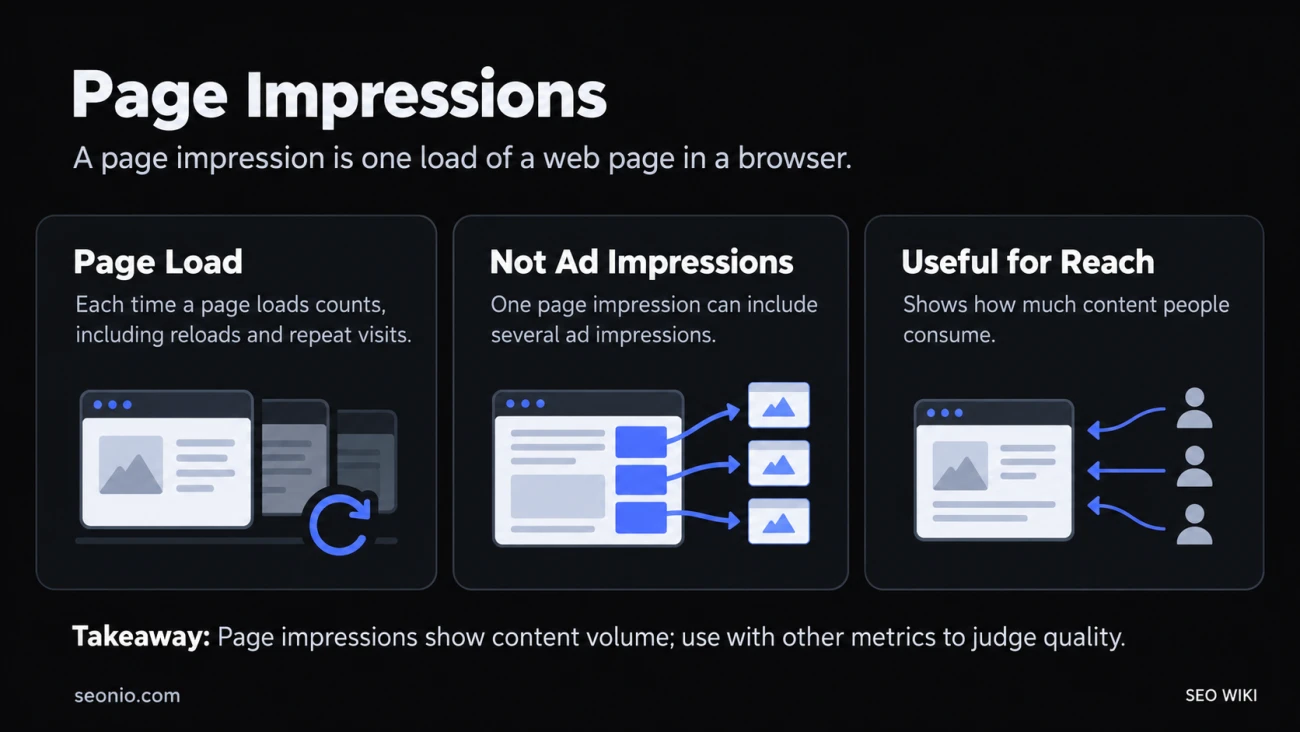
A page impression (PI) is counted each time a web page is called up in a browser. A reload counts again, and so does a second visit to the same page. It's the same idea analytics tools usually call a page view; Google Analytics simply calls it "Views".
The term is most common in online publishing and ad sales, especially in German-speaking markets. There, the IVW, the industry body that audits the reach of ad-carrying media, reports page impressions as the number of all page requests on a website, alongside visits, time spent and unique visitors. IVW
Page impressions vs other kinds of impressions
"Impression" means different things in different reports, and mixing them up is the most common mistake with this metric.
| Metric | What one count means | Where you see it |
|---|---|---|
| Page impression | A page was loaded in a browser | Publisher reach figures, media kits, audited statistics |
| Page view ("Views") | A web page or app screen was seen; repeats count | Google Analytics and other analytics tools |
| Ad impression | An ad was served in an ad slot | Ad servers and ad platforms |
| Search impression | A link to your site appeared in search results | Google Search Console |
A few details are worth knowing:
- One page impression can carry several ad impressions, because a page often has more than one ad slot. Don't use page impressions to check how many ads were delivered; use the ad server's figures. Ad servers may also count "viewable" impressions separately. Google Ad Manager counts a display ad as viewable when at least half of it has been on screen for one continuous second.
- A search impression isn't a visit. Search Console counts an impression whenever a link to your site is on the results page someone is looking at, usually even if they never scroll down to it. Clicks divided by those impressions give your click-through rate.
- Social platforms use their own definitions. Check each platform's help pages before comparing their "impressions" with anything else.
How page impressions are counted
Most sites count them with an analytics tag that sends a hit each time a page loads. Google Analytics sends its page_view event on every page load, and also when a single-page app changes the address without a full reload, through browser history changes. Without that setting, a site built as one app would show far fewer views than the pages people actually saw.
Server log files count page requests too, but they include crawlers and bots unless you filter them out. Google Analytics excludes known bots automatically, and you can't turn that off. Visitors who block tracking, or don't consent to it, may not be counted by a tag at all, so tag-based counts and server logs rarely match.
What page impressions are good for
- Measuring how much content people consume and whether it's growing month over month.
- Selling advertising. Page impressions show how much ad space a site can offer. Display ads are often bought per thousand ad impressions; Google Ads, for example, offers this as a bidding option on its Display Network (cost per mille), and the page count sets a rough ceiling on that inventory.
- Working out pages per visit. Divide page impressions by visits. Say a news site records 2 million page impressions from 500,000 visits in a month: that's an average of four pages per visit.
Where the metric falls short
Page impressions reward splitting content up. A photo gallery that loads a new page for every image, or an article broken across five pages, multiplies the count without anyone reading more. So look at visits, unique visitors and time spent alongside it.
A page impression also says nothing about attention. The page loaded, but you don't know whether anyone read it, scrolled or left after a second. Use page impressions for volume and pair them with unique visitors and engagement metrics when you need to judge quality.